Tuesday, February 26, 2019


Are the Rich more Likely to be Morally Challenged?
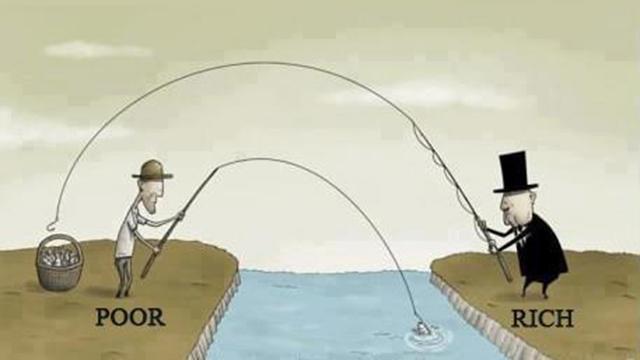


How pathetic for Robert Kraft, rich enough to pay for whatever sexual services he desires, to be caught in a shabby massage parlor in a ratty strip mall, not once but twice.
The local paper took advantage of this embarrassment of one super rich owner of a sports team—and not just any sports team-- to list some of the other instances of team owners falling afoul of the law for fraud, for being addicted to pain pills, for being blatantly racist. Other owners participated in major bribery schemes or were overwhelmed by gambling debts. Without quite saying so, the paper seems to suggest that the very rich team owners are often tempted to act very badly and often succumb to the temptations.
Is this just the envy of ordinary folks speaking? We work hard and toward the end of every month we are short of cash. So when the rich are embarrassed publicly we can't help gloating and boasting of our—supposed--moral superiority. You and I are not tempted to pay huge bribes to politicians or to run up $25 million gambling debts. So we can feel morally superior when we do not indulge in such behavior.
But perhaps our suspicions of the moral weakness of the very rich is not completely unreasonable. Let us ask: how did they get to be so rich? I am not asking what it is about Robert Kraft that makes him so much wealthier than I am. I cannot answer that question because I do not know Kraft. Does he work harder than I do, is he smarter, is he more interested in wealth than I am? I have no idea. But the question is not about the character and personality of the rich. It is about the system controlling our lives. What does this system require of us to become very rich or even moderately so?
It seems clear that competition is at the heart of our system; the winners must be prodigiously good competitors. The rich are better competitors. But competitions are of different sorts. Some are completely benign; in others the outcome is brutally destructive of some participants in the competition while others walk away with impressive wealth.
In some competitions, the winner simply worked harder, worked longer hours, was more focused than all others. The winner trained more frequently. Even at rest his or her thoughts were wholly taken up with the upcoming competition. Completely concentrated they win. This is a benign competition that produces exceptional performances. But it is only one kind of competition.
In the early days of the personal computer, anyone could purchase the parts and assemble a machine. I have done so myself. As a consequence a large number of small enterprises produced inexpensive but quite adequate table top computers. Bill Gates participated in this computer business, competing with many other entrepreneurs to found a profitable business producing personal computers. According to one biographer, Gates' style of competition was not benign. He did not try to get ahead of the pack by being more diligent or inventive. His energy was focused on putting his competitors out of business. His project was clearly destructive, to reduce the competition by underselling machines of other producers and ruining the competing business. This kind of competition aims clearly at the injury of the competition. Some athletes in team sports seek to injure members of the opposing team. Here competition is intentionally destructive.
A third form of competition injures third parties. Tobacco companies concealed the damages done by cigarettes. The health of consumers counted for nothing as compared to the company's bottom line. Similar competitions injuring third parties occur when companies pollute streams, dump toxic materials, use fracking techniques and hide their destructive effects.
Enterprises using these destructive forms of competition do not always end in the winners' circle. The owners of the Orchids of Asia Day Spa in Jupiter FL where Robert Kraft is said to have enjoyed sexual services for $79 an hour are not likely to be billionaires even though they traffic Asian women, keep them locked up, and force them to do sex work. Here third parties are grievously injured. The perpetrators nevertheless do not become as rich as some of their patrons.
Some competitors however succeed to parlay their destruction of opponents or of third parties into obscene wealth. Instances of their techniques are everywhere. While the rich are rapidly getting richer, wages and salaries of common people have barely rise in the last 50 years. Although prices have risen steadily, the minimum wage has remained unchanged until recently. An energetic movement to raise the minimum wage encounters strenuous resistance from employers; they are determined not to pay a living wage. They, often champions of family values, also resist paid maternity and paternity leave. Their main interest is to raise their profits by keeping wages and salaries as low as possible. They compete strenuously and do not mind if their competition injures large groups of their fellow citizens. Nor should we forget how, in the past, the rich derived their wealth from keeping slaves, or exploiting black tenant farmers violently during the era of Jim Crow.
Yes, the rich are more likely to be competing with methods doing serious damage to large numbers of Americans. Are their moral stamina more fragile than that of most of their fellow citizens? I doubt it. The basic truth is that our economic system, placing competition at the center, encourages enterprising men and women to compete by doing serious damage to many others. In so doing successfully they not only earn lots of money and high social status but they do untold damage to citizens who do not earn a living wage, whose drinking wells are polluted or who are forced to work as prostitutes. That is the naked face of capitalism.

Tuesday, February 12, 2019


I am a well meaning white. How can I fight racism?

 While it is easier than it has been to be openly racist, there are more well-meaning whites who are sincerely trying to oppose racism. Witness the troubles of politicians in  Virginia whose racist blackface pictures from years ago are now the grounds for Democratic Party officials calling for their resignations. Insulting black Americans today disqualifies whites from serving in elective office. Whites who oppose racism are suddenly very numerous. Their voice is loud and clear. It is being heard and it is taken seriously even though it is not always decisive.
Whites are on the march against racism. They belong to reading groups that serve to inform us about the daily life and trials of African Americans. They attend anti-racism trainings. White speakers about white anti-black racism can command sizable fees. White groups listen patiently with contrition to black speakers who, often angrily, rehearse some of the cruelties whites have inflicted on blacks. Many whites are willingly taking responsibility for the inferior economic, social and political condition of blacks.
At the same time many groups of well-meaning whites are bewildered by their condition. They want to do something. Often they want to help, specifically, they want to help black people but they do not really know how to go about that. Often whites want to make friends with black persons but that is difficult for many reasons. Residential segregation makes it difficult for white to meet blacks as neighbors. A minority of blacks have middle class jobs; whites often do not have the opportunity to meet blacks at work. Add to that the long history of whites cruelly taking advantage and oppressing blacks. After more than 400 years of white mistreatment of blacks, many are reluctant to open themselves to friendly relations.
Whites feel guilty about what blacks have suffered and still suffer. That guilt is well justified. We should feel guilty. But the guilt leads us into wanting forgiveness and hence at best friendship with blacks. If that is not possible, at least we want to be able to help in order to receive some acknowledgment from the blacks we help that we mean well, that we are sincerely trying to overcome our racist upbringing. But now our opposition to racism is all about us, the whites who have maintained and still maintain a system of racial oppression, of making sure that blacks have the worst jobs, live in neighborhoods where housing is not well-maintained, most likely by white owners--, attend inferior schools and are treated as outsiders in a country where most of them have lived for many more generations than the whites who are treating them as strangers who do not quite belong in this country.
Whites who want to oppose racism must begin with the basic fact that racism has been maintained by whites because it was and still is, to their advantage. Slaves worked for nothing. The Plantation owner did not have a bill for wages. He only had to pay for food and inferior living accommodations. In the century since the end of the Civil War blacks were maintained in debt to the owners of the land they farmed and the owners profited significantly from the hard labor of their black tenants. Today, held back by frequently inferior schools (unless black communities manage to organize their own) they get to do the worst job and earn the lowest wages. Average annual wages, for instance, for whites are $60,000.00, for blacks $39,000.00. Blacks receive a little more than half of what whites receive in Social Security or pension payments. Somewhere white employers save on their wage bill by employing blacks. Restricted to “black” neighborhoods by real estate firms and banks, black neighborhoods tend to be extremely overcrowded and landlords—mostly white—can charge exorbitant rents. Prisons—more often than not profit making enterprises—have a disproportionate number of black inmates. Operators of the private prisons lobby legislatures to invent more crimes or to increase mandatory punishment for already defined crimes. Schoolchildren of color are expelled more frequently from schools, police are constantly on the lookout for black children breaking the law. The society is organized to maintain the disproportionate number of black prisoners.
I could go on and on relating the many ways in which white society continues to be openly hostile to black Americans. The point of rehearsing these terrible facts is to point to the things that well-meaning white can and must do to ameliorate the condition of blacks. They must put an end to their systematic oppression and exploitation of blacks.
Black poverty is a a problem because pay for the jobs at the bottom of the employment scale is too low. Supporting actively the agitation for a minimum wage of at least $ 15.00 is one way in which whites can “help” blacks. Yes, of course, whites also have minimum wage jobs. They too live in poverty due to starvation wages. But that surely is no reason to oppose pushing for a living wage.
Housing conditions can be ameliorated by sending real estate agents to jail who work to maintain segregated neighborhoods. Landlords that do not maintain their buildings should be sent to prison. City officials who do not enforce housing ordinances in black neighborhoods should be punished.
These changes will not come about without the hard and dedicated work of whites who want to help blacks. All of these changes would serve to improve the lives of some black citizens. The educational opportunities of black children will only be improved if citizens white and black continue to push for equity in the city's schools.
Blacks are subject to many injustices. It is clear that whites need to recognize their role in maintaining these injustices up to now and need to begin to work to rectify them as far as they can.

Thursday, January 31, 2019

Why Moderate Fascists Are Called Populists


In the late 19th century a movement arose in the agricultural areas of the United States, especially among poor farmers in the southern states, which was called populism. This movement stood for three beliefs.

The first was that contemporary America was divided sharply into two groups: the working people (especially the farmers) and the large corporations just coming into existence (especially the banks). There was much to support this first belief. Farmers worked all year round but didn’t get paid regularly throughout it. They would sow, weed, irrigate, cultivate, but as long as they had no product to sell, they didn’t make any money. As a consequence they were starved for cash during certain parts of the year and had to depend on banks to loan them money to buy new seeds, fertilizers, tools, and farm animals. Farmers were (and continue to be) very dependent on banks and banks have taken advantage of that.

This leads directly to the second belief of the populists: the rich corporations and banks took advantage of the farmers while they remained impoverished. The third belief was more remedial in nature: that the government should be a government of, for and by the people, not a government of and for large corporations and big banks.

This movement was politically powerful for about 10 or 15 years and then it died. One of its striking characteristics during its heyday was its opposition to racist divisions which in the late 19th century were as powerful as ever and more out in the open then they may be today. It was therefore not uncommon to find among the populist farmers of that era farmers of color.

This is interesting because the word “populism” has suddenly come back into constant use. Everyone talks about this or that populist movement or organization. But the word is now not used to describe a movement of working people and farmers who demand greater political power against the very rich, large corporations, big banks, or real estate billionaires. Such a movement does not exist.

Instead the people who are called populists today are moderate fascists. They draw lines between themselves and others and often those lines are racial. Unlike the populists of 130 years ago, today’s populists do not make efforts to bury racial distinctions but are racists. White supremacists of all stripes are called “populists” whether they are out to get African-Americans or Hispanic people. Color lines are important. Americans – at least good Americans – have white skin.

European populists oppose immigration, as do American populists, and those immigrants tend to have darker skins than Northern Europeans. People with brown skin should go back to Africa or Latin America. They should not be here. As far as I know these are moderate fascists. They are not drawing up plans for gas chambers. But when well-meaning people leave plastic containers of water at the border to help immigrants who come across the hot desert, these new kind of populists don’t hesitate to pour out the water and make it more likely that the immigrants die of heatstroke. They are murderous all right.

Using the word populist today to apply to these right wing movements is often justified by describing the populist movements as being in opposition to the contemporary elites. A newspaper article about the annual meeting of super rich big shots in Davos, Switzerland, describes the representatives of global corporations and banks as the elite who are the target of protest by today’s populists. Similar definitions of today’s populism can be found in other publications.

But a little thought shows that this characterization of “populism” in 2019 makes little sense. Donald Trump, one of the leaders of American “populists” today is a billionaire (even though there is considerable debate about how he comes by those billions since he seems to be an incompetent businessman). At any rate he is part of the elite which populists are supposedly opposing. But the people who are called populists in America today adore Donald Trump. They believe everything he says and with it all the bad mouthing of immigrants from Central America. They believe with him that we need a wall at our southern border. They believe with him that cutting taxes for the rich will benefit the middle-class.

Donald Trump supporters have been studied carefully. What many of them like is that he is rude, foulmouthed. They like the violence of Trump. Fascism is notoriously violent. None of this involves a critique of a so-called elite or calls for giving power back to the people to rule themselves in their own interest.

Why then call these new moderate fascists “populists”?

The new moderate fascists are not committed to democracy. They want rights but only for white people and more for white men than white women. But calling them “populists” misrepresents them as advocates for popular democracy. It misrepresents them as the enemies of the very rich and powerful. It makes it appear that contempt for persons of color, contempt for people not born and raised in America, contempt for women are all acceptable stances consistent with the traditional American belief in freedom and democracy.

The captains of industry including the big bankers have always been very hesitantly committed to democracy. The Koch brothers today corrupt the democratic process by buying Congress persons and senators. A process which is supposedly representing all Americans has in fact become largely a process representing the rich. The misnamed new populists admire the very rich and powerful. They share the mission to limit rights and democratic participation to white men.

This is obviously not a project that will win you friends in America (except on the moderate fascist fringe) and therefore needs to be concealed and misrepresented. Calling moderate fascists populists is an attempt at confusing the real mission of these groups and their sponsors in the elite.

Accordingly these new fascists in the United States, in the United Kingdom, in Europe, in the West as well as the East, have acquired this rather venerable and respectable name of “populist”— people who do not want their lives to be run by big banks and big business but want to run their lives themselves—as the name for the moderate fascism they favor.

But this is a shabby propaganda move that both besmirches the name of a respectable movement in American history and does so in order to hide the close connection between large corporations and banks, and the alt-right, anti-black and Hispanic racists, anti-Semites, anti-Muslims.

What matters here, is, of course, not just a word –”populism” – but the alliance between powerful business interests who are not very happy about democracy – to put that very politely – and people of low and middle income who for reasons of their own are also enemies of democracy, who think the Constitution was meant only for them. The misuse of the word populism is an effort to conceal the concerted effort of rich (and some white poor) to undermine what remains of our democracy. The new populists, unlike the 19th century populists, are a serious threat to our most important traditions.

Wednesday, January 16, 2019

Men's Rights
 

The last 60 years or more have witnessed an enormous amount of activity on behalf of rights that had previously been ignored or violated with impunity. African-Americans in their almost 400 years of struggle for justice made one more push during what we now call the Civil Rights Movement. Women gathered together to talk to each other about their positions in the family, as daughters as well as wives, mothers, or employees. Their protests were raucous and effective.
Women demanding equal rights, equal respect and equal pay challenged established versions of what it meant to be a man. Several different men's movements came into being in response to Second Wave Feminism.
Some men persuaded by the complaints of different feminist groups came together to change the role men played as husbands, fathers, friends or employers. They saw that men had, in the past, taken gross advantage of the physical labor as well as the emotional generosity of their mothers, sisters, wives and girlfriends and determined to mend their ways by doing their share of the housework and the childcare and surrendering their previous assumption that they were, in all respects, superior to the women whose services they demanded.
From the complaints of women about the emotional poverty of many men, their inability to be warm and just make friends, their inability to share their inner lives openly with others, another men's movement came to be that brought men together in groups to talk openly about much of what had before been hidden by each man or perhaps had even been unnoticed and certainly unexpressed. Men came together to cultivate their friendships, to learn to be expressive and share each other's inner lives with others. They learned to be more independent of the social skills and emotional availabilities of the women in their lives.
This second sort of men's movement did, at times have a misogynist edge. But that was certainly not the essence of it.
In recent years, a third men's movement has come to the fore and received a great deal of attention on various social media – a movement often referred to as the Men's Rights Movement. This movement is more often than not openly misogynist. It adapts the language of many feminist groups that complained about being oppressed by men by claiming that, instead, men are today being oppressed by women.
Those complaints are raised by different groups of men. One of those groups consists of divorced men whom the Courts compel to pay for the support of their former wives and the children who now live with their mother. Those complaints arise in different situations. If a family barely gets by to the end of the month without falling into debt, once it splits up as a consequence of divorce, there is not going to be enough money to go around. After the divorce the income that previously barely supported one family now has to pay for two households and that means rent on two different houses or apartments, at least two cars to get everyone to and from work, etc.. But getting divorced does not provide a better paying job and in many families the divorce brings with it serious economic deprivations. Many men believe that the legal compulsion to support their former wives and their children are a profound injustice. They feel oppressed, exploited and complain about violations of their rights.
A very different group of members of the Men's Rights Movement are the people who refer to themselves as "incel" or involuntarily celibate. These are men who cannot find a permanent girlfriend. Women are not interested in them. They regard them as odd and not material for serious relationships. They may be physically unattractive, incapable of listening to anyone else, excessively needy or unable to be supportive of other persons. Perhaps not surprisingly such men do not find the fault in themselves but blame women for not wannting to sleep with them.
Other men, for what ever reason, do not like women. They profess to be unable to understand women. They are afraid of them, they are afraid that women will make fun of them; they are excessively preoccupied with gender. Most likely they are not very sure of themselves and unskilled in establishing pleasant friendships to women or to men.
These different versions of men's rights makes sense for men for whom their gender is central to their identity. In relations to other men they talk about their sexual prowess and the ways they humiliate women. Much of this talk is just pretense. They are simply trying to impress other men with their powerful masculinity where being masculine means dominating women.
Instead of warm and enjoyable friendships, these men think of relationships as forms of competition in which domination is the goal. It is not surprising that women hesitate to be friends with them since being friends is a skill they lack. Nor is it surprising that women appeared to be mysterious since, more often than not, they are not interested in playing domination games. Since they think of relationships as competitions for power, they have difficulties understanding why their marriages don't last. Their ex-wives' demands for financial support is misinterpreted as part of a power struggle. At every turn they see illegitimate attempts at domination. They do not understand any other kind of relationships.
We could write these men and their claims about their rights off as pitiable failures, as rare human beings who did not learn elementary social skills while they were growing up. But these men who are fixated on their masculinity and their ability to dominate other men and especially women are not just unusual failures, exceptions to what most men are like in this is most obvious in business this society. Instead the men's rights movement is the product of important themes and tendencies in our society.
The desire to dominate, to be stronger, more violent, to make every situation into a competition, to praise men who are good competitors and who often win is a widespread attitude in this society. This is most obvious in business where winning out over the other party – putting them out of business – is the goal of competition. Cooperation is an option only where it makes money for both parties. Concern for a competitor is completely wrongheaded. The greatest admiration and praise goals to the people who get very rich at the expense of other businesses. Similarly, violent sports draw huge crowds of spectators every weekend. Boys, even quite young, are taught to play football or ice hockey – sports that require among other skills the willingness to cause pain to others. They are taught that winning is all important, that they should not be held back by physical pain, that being gentle and caring about the pains of others is not manly and should therefore be avoided at all cost. Members of the men's rights movement adhere to similar values centered on competition and winning at all costs in their relationships, especially to women.
The Men's Rights Movement holds up a mirror to American men and shows them the distorted and inhumane version of masculinity that they widely hold and respect. It shows how impoverished and pitiful that concept of masculinity really is.

Thursday, December 27, 2018


Is the Government Our Enemy?


Ronald Reagan's conservatism insisted that the government is the enemy of the ordinary citizen. When the government makes its appearance you had better watch out. Contemporary conservatives still hope to reduce the scope of government involvement in the lives of ordinary citizens. This is an attractive position. Everyone has stories of being frustrated by the demands of official bureaucracies. There is very little any citizen can do even with his or her private property without the intensely annoying need to ask permission from some government bureau.
But government does not only regulate where we often feel regulation to be unnecessary or even destructive – destructive of citizen initiative and self-determination - government also supports significant portions of the population. In some parts of the country such as coal country in Kentucky, more than half the population is supported by government payments for food, for healthcare, for housing. (NYTimes, Saturday, December 22, 2018)
One would think that the people who effectively live off government support would not vote the Republican ticket. They would not buy the anti-government propaganda because they know that were it not for the government, specifically for the federal government, they would starve and so would their children. In different parts of the country the jobs that maintained parents and grandparents – jobs in the mines, in steel mills and in manufacturing, well-paying, skilled jobs that maintained previous generations - are no longer there. Those jobs did not make anyone rich but they maintained families without too many financial worries and they created a working class that took pride in their accomplishments. The paycheck they took home at the end of the week, they felt, was earned by hard work and by skills they slowly learned on the job.
But now these jobs are gone and for many there are no other jobs available, other than temporary work that rarely lasts. In some of these areas about half the people are pretty much out of work and live, as we would say, "on the dole."
The surprising fact is that in spite of their dependence on the government, many of the citizens support the conservative position and vote for Donald Trump, regarding the government that actually keeps them alive as their enemy. One of the sources of Donald Trump’s support is actually in areas where work is scarce, does not pay well and many people are dependent for their livelihood on government handouts.
Not surprisingly that has perplexed a lot of observers. How could people dependent on the government be hostile to it? The explanations usually offered are that these segments of our population are mostly poorly educated, not very intelligent people who voted on their feelings instead of thinking about where their real interests lie. It seems undeniable that they vote against their most pressing self-interest and no one would do that if they were paying attention or if they had average intelligence.
However reasonable that explanation may seem, it has left many people uncomfortable. Why should our political enemies all be mentally deficient? Is there no one on our side who does not fail to think hard about political choices and is inspired by random emotions instead of careful thought? The explanation that poor people support the champion of the rich, Donald Trump, because they are plain stupid does not appear to be satisfactory.
Observers who hesitate to question the intelligence of conservatives sometimes try instead to explain their apparent voting against their own interests by portraying them as victims of propaganda. The poor people who vote against their own interest, it is said, are confused by the constant drumbeat of propaganda in the media, in entertainment, and in religion in favor of capitalism, in favor of the system that enriches some and leaves many others without work they can be proud of. But of course accusing people of being deceived by propaganda which would not for a moment deceive you and me is drawing an invidious distinction which is no more acceptable than calling conservatives stupid.
Now comes a professor from Cornell who, in a recent book, argues interestingly that the hostility against government does not only consist of hostility to government regulation – although that is an element in this conservative stance. (Suzanne Mettler, The Government Citizen Disconnect). The hostility to government is a result of putting people on the dole, paying for their food and lodging, making them completely dependent on various government bureaucracies. The complaint of workers in coal country, in towns supported by steel mills or heavy manufacturing plants is that there is no work for them. Working, especially if the work requires skills, supports self-esteem. Doing a good day's work that produces valuable goods, that leaves you tired at the end of the day gives you satisfaction. If the work requires skill you can be proud of having those skills and of doing what not everyone could do.
But those jobs have disappeared and no one in the government is at all concerned to bring them back or to replace them with comparable work. Just giving out of work miners or workers in the steel mill money so they can live and feed their children these miners and workers see as profoundly disrespectful. No one cares about their lives, no one cares about whether they can do work that is a real contribution, whether they can stand tall for being workers in what ever industry.
This is an interesting and important insight. It raises questions about what the role of government should be. Many people , especially on the left, are perfectly content to think of the government as a dispenser of funds to support the livelihoods of ordinary citizens. The role of government is to help people. But here now is a different conception of the role of government. It needs to create the conditions for citizens to have good lives, lives that satisfy, lives that one can look back on proudly with the sense that one has made a contribution to the betterment of all, that one's life had been worth living, that one’s goal had been more than simply not starving or freezing as a homeless person. What is valuable is not merely biological existence but life as a member of a community where one makes a contribution that is needed.
Given current economic realities, given the rise of robotics as a serious threat to human activity, no one, including governments, may be able to find good work for everyone. If that is so, governments need to be the agents of finding alternative activities for everyone to do their part in the life of their communities. What such activities that government might foster would look like is not totally clear. On the one hand, there is necessary work, for instance, rebuilding the nation’s infrastructure, that the government should set in motion by financing it (instead of enriching the super rich through tax cuts.). On the other hand, the New Deal Projects like the Civilian Conservation Corps, or the WPA suggest how to think about creating good work.
Merely objecting to the government is not helpful here. If the role of government is going to change in a positive way towards enabling people to have good lives instead of merely staying alive, we need many different positive suggestions and reflections about them. Significant social changes is needed to resolve the challenge of men and women whose work has disappeared.
The people who may seem to vote against their own self interest are not unintelligent, they are not confused by propaganda. They need their society to care enough about them to develop new possibilities for leading lives that are worthwhile because they make significant contributions to this society.

Monday, December 10, 2018


What do you think about prisons?


According to common wisdom prisons serve several functions. The most important one is to punish people who break the law. The purpose of punishment is not just to seek revenge on people acting badly but also to discourage lawbreakers. The expectation is that someone who is tempted to break the law, will think twice for fear of getting caught and being sent to prison for a long time.
Prisons are often called "correctional" institutions. We expect that during their time in prison, inmates will learn not to break the law again. We expect them to learn to be better persons, better citizens, to learn to control their antisocial impulses, to learn to get along with their friends and neighbors and people at work. Prisons are supposed to "rehabilitate" prisoners.
Prisons are expected to mete out punishment and thereby deter potential lawbreakers and to really train and improve actual lawbreakers. There seems to be no doubt that prisons are important and valuable institutions in our society, well worth the cost of building, and maintaining, and running them.
In recent years, historians and social scientists have looked more closely at the history and functioning of prisons. They have found that the common wisdom about prisons is not as self-evident as we have thought. Prisons have served and still serve quite different functions. It is not as obvious, as it often seems, that prisons are valuable social institutions.
First, let's look at the past. At the end of the Civil War we passed the 13th Amendment which outlawed slavery. Slavery and involuntary servitude were abolished "except as punishment for crime, where all the parties shall have been duly convicted." The condition of slavery was no longer legal except in the case of convicted criminals. Former slave owners made elaborate use of this clause in the 13th Amendment. Many southern states passed so-called "Black Codes" – laws for which only black people could be convicted. Thus former slaves, just recently freed from having to work without pay, could now once again be subjected to penal servitude. Black codes made vagrancy illegal. Anyone could be declared a vagrant who was "guilty of theft, had run away from a job, was drunk, was wanton in conduct or speech, had neglected job or family, handled money carelessly of was in other ways, an idle and disorderly person." Almost any black person could be arrested and sent off to prison. Once in prison, convicts were leased out to private parties. Convict labor, not at all or barely remunerated, produced the bricks that paved the streets of Atlanta, Georgia. Convicts were leased out to cotton farms to do the work they had done as slaves. Convicts worked in mines, built railroads, and labored in steel mills.
In some respects, the condition of convicted laborers was worse than that of slaves. When buying the slave, the owner had invested a certain sum of money; they were not interested in working the slave to death. The mine owner who leased a convict had no investment in that person and did not hesitate to push them beyond human limits.
The prisons after the Civil War populated primarily by black men did not serve to punish or rehabilitate. They served to produce a new class of quasi-slaves. The purpose was to provide the cheapest labor possible in order to enrich the capitalist owners of steel mills, coal mines, and other profit-making enterprises. These prisons were difficult to justify. They were racist, unjust institutions in which the state made common cause with large capitalists to exploit the labor of black Americans. There was no possible justification for maintaining those kinds of prisons.
Convict leasing is still being practiced albeit not in quite as brutal form as previously. But inmates of American prisons are producing all kinds of products – license plates are the best-known but not the only ones. For this work inmates may earn two cents an hour or some other ridiculous pay. The purpose of prisons remains the same: to provide free labor to industry and commerce.
In our day prisons have acquired a new function which has little to do with punishment or rehabilitation. Prisons have become private enterprises designed to make as much money as possible. The more inmates a prison has, the more profitable it is. Private prison companies are therefore lobbying state legislatures to pass new criminal laws, or to increase the punishments mandated for any given crime. The prison companies manage to have more inmates and to keep them for a longer time and the only purpose of those changes is to increase the profit of the prison company. The well-being of inmates, their re-education are of no interest. Profit for private corporations is the only goal.
The common sense understanding of prisons is clearly defective and wildly incomplete. Responding to these facts a movement of "prison abolition" has become powerful. But the meaning of that term – prison abolition – remains unclear.
The best way of thinking about prisons is to ask ourselves what the purpose of different prisons are. Some of them are clearly illegitimate. Prisons designed to make money for private companies should be abolished. Prisons that provide more or less free labor to capitalist enterprises should be abolished. If prisoners work in prison, they should be paid a decent minimum wage.
Prisons are populated through the so-called "school – to – prison – pipeline." Students, primarily students of color, are expelled from school for being difficult, they are arrested by police in the schools, and before we know it they are locked up in juvenile detention centers and from there in adult prisons. Prison abolition means, in practice, that this school to prison pipeline must be closed.
Prisons are today used to warehouse patients with mental illness. That is a practice that should be condemned and ended. Prisons are often used to lockup patients with addiction problems. Rich people can go to addiction clinics that charge more than $1000 a day. Poor addicts are incarcerated. Clearly that is an unjust and destructive practice. We need treatment facilities for all addicts who want them.
There is much more to think about. What shall we do with women who have children? When their mothers are imprisoned there is no one to look after them. What does it take to rehabilitate someone?
The role of prisons and our society is very problematic and extremely complicated. Common sense accounts are lazy ways of avoiding this problem.

Monday, November 19, 2018

                                                    
                                                    Thanksgiving


I have always had a special fondness for Thanksgiving. Coming to the United States from Europe, barely a year after the end of World War II, life here seemed blessed and free. The policeman in the street had absolutely no interest in me or my papers. I did not have to show my identity papers to anyone; people did not carry identity papers.

Providing food involved no more than going to the A&P down the street. It was not a major effort that took up most of any day. I was very thankful for this liberation and celebrated Thanksgiving wholeheartedly.

That was almost 75 years ago. The world has changed a great deal since then. Some of the most ominous changes have not come to an end. The same processes continue and do not bode well for the future.

Thanksgiving today is a celebration deeply embedded in a commercial environment. Retailers have invented Black Friday, a frenzied grabbing for "bargains" which more and more appear to be often deceptive, a covert technique for unloading undesirable merchandise on people too tired or too ramped up to notice. Thanksgiving has become the prologue to a major fleecing of the public by big box stores. More recently this sorry event has been extended over the weekend to the next Monday.

"If people want to join that frenzy" you say, "they should be free to do so." That is of course true but  Black Friday and everything connected to it shows us how commercial interests will shamelessly take a gentle and lovely family celebration and turn it instead into something quite different, robbing it of much of what made it so valuable. Our traditions count for nothing. Making loads of money is all that matters. And as ordinary Americans, we have no say and really no recourse to restore our older culture.

If you don't believe this watch for the next five or six weeks. Did you notice that Christmas has changed from what it was when you were a child? If not, watch what is about to happen.

It is not pretty.

Ask your grandparents what Christmas was like when they were children. For myself, as a child in Germany, the during the Great Depression, there were presents but they were very practical and they were homemade. My mother would knit me a pair of new socks and that was pretty much it.

Compare it to today!

Thanksgiving also presents us an illustration of the utter ruthlessness of our commercial culture. Many Americans will cheer on their favorite football teams during the afternoon. (Perhaps that will be a way of avoiding embarrassing disagreements about Pres. Trump and his stewardship of the presidency.)

But credible evidence has emerged in the last few years that playing football is very bad for the players and that a certain number of them end up with serious brain injury. So far the teams and, more importantly, their owners have downplayed this evidence. The fans might not like it if the violence on the field were reduced and that would revenue. And so, once again, it's money that talks loudest and the health and well-being of exceptional athletes counts for less.

Thanksgiving has changed because what we we give thanks for is no longer the same. With only about 3% of Americans engaged in agriculture we are not giving thanks for the harvest unless it be for the tomatoes and corn in our home gardens. We are giving thanks for bargains which may be deceptive – we may be giving thanks for being duped by the box store. We are giving thanks for the profits that roll into the pockets of football team owners.

Not the same, is it?

Our commercial culture is transforming our traditions. America is changing even as we live in it. We need to open our eyes to see the changes and protest them if they are not acceptable.

Wake up !