Showing posts with label propaganda. Show all posts

Wednesday, October 21, 2015

Lies that Kill


     Osama bin Laden at one time lived in Kandahar, Afghanistan. When he moved to Pakistan he left behind a collection of 1500 audiotapes which by a circuitous route came into the hands of CNN.

    Among these tapes was the entire speech from which American journalists extracted what has come to be known as the "Declaration of War against the United States" speech. A journalist by the name of Flagg Miller, who speaks Arabic, has listened to the entire speech and in his judgment calling it a declaration of war against the United States is a complete misrepresentation. According to Miller the main targets of criticism in that speech are authoritarian Muslim regimes. (https://news.vice. com/article/what-i-learned-about-al-qaeda-from-analyzing-the-bin-laden-tapes)

    Obviously that puts the conflict in the Middle East in a very different light. What has been presented to us an enemy of the US, Al Qaeda was, at least originally, a much more complex and disunited movement. We have spent the last 15 years making sure that we would become the main enemy of dissident Muslim movements like Al Qaeda.

    This reminds us once again that the political system we live under has ceased being a democracy. In a democracy the citizens at large have, at least, an important voice in setting government policy. But if the opinions and judgments of citizens are manipulated by making them believe, for instance, that they are in danger, when in fact they are not, they no longer are the independent rulers of their country but are no more than pawns in a high-level power game that few understand.

    Many Americans believed that Al Qaeda was dedicated to only one goal, the destruction of America. That seemed to justify the expense in life and in money we suffered in Iraq and Afghanistan. But now it turns out those stories were made up. The situation is and was much more complex as were the conflicts in which, at first, we were at the margins and the enemies were Muslim dictatorships.

    Al Qaeda was not the threat we were told it was. Saddam Hussein did not have weapons of mass destruction. Our country has spent excessive amount of money which was needed at home, on killing and destroying in faraway places. The decision to do that was not made by well-informed citizens but by voters manipulated by journalists and politicians, for reasons of their own – reasons that are often still opaque.

    The attack of 9/11 and its aftermath of manipulating public opinion into two wars which we lost, have indeed dimmed the reputation of the United States.. But the authors of this loss were not primarily Arab conspirators but manipulators of the news in the United States itself.

    It is really alarming to realize that. Our enemies are not overseas. They are not the youngsters at the margins of American society who dream of glory fighting with ISIS. Our main enemies are the manipulators of news, the manipulators of congressional actions, the public relations experts who misrepresent to us the world in which we live.

    These hidden enemies are assisted, often unwittingly, by local politicians, by high school history teachers, by notables who give commencement addresses, and others who pass on the misrepresentations foisted on us by the media and the people who own and run them.

    The upcoming generation grows up misinformed about their, and our, world. When young people talk about the 1960s, they know about the "hippies" but know little about the antiwar movement. They know about Martin Luther King but do not know the cruel and, at the same time, inspiring history of centuries of black resistance. The relative changes in the position of African-American is presented to them as the action of benign government that passed civil-rights legislation after Dr. King addressed a large crowd on the Mall in Washington

    Anyone who suggests that there is a group of people manipulating government policy by manipulating the information voters get, is likely to get accused of being paranoid, i.e. crazy.

    Were I to say that there was a secret cabal of powerful people who run everything, that accusation might be deserved. But of course the situation is much more complex. We were manipulated into two devastating wars – devastating for us, and even more devastating for the people in the Middle East – by a group of warmongers, with macho fantasies about US military power and glory, with an important side interest in controlling Middle East oil.
  
 The mythology about capitalism and the free market system is obviously perpetrated by a different group consisting of businesses large and small that receive government subsidies but want to resist regulation. These myths have tended, at times, to produce a workforce that will,  without complaint, accept layoffs in the interest of stockholder dividends. They have tended, at times, to produce a working class that does not get rewarded appropriately for its efforts but accepts that by blaming itself for not having more education.

    The mythology that global warming is the invention of scientists greedy for research grants is pushed by different groups again.

    The perpetuation of racism must be blamed, in part, on media who sell more copy "if it bleeds." Stories about addiction, drug dealing, gangs are preferred. Stories about decrepit schools, unjust treatment by social workers and police, of being taken advantage of by landlords – those stories are not heard very often.   

      If the people are fed many mythologies about their own country, they are not in a position to rule. What we call democracy is no more than an elaborate charade. The strings are being pulled by those who manufactured the information that most people get. The misrepresentation of Osama bin Laden’s "Declaration of War against the United States" is just one horrifying example of that.

Monday, October 12, 2015

Participatory budgeting


With the presidential campaign front and center and money flowing like manna from heaven the, question of democracy – what it is and whether we can still claim to live in a democratic country – is coming to the fore again.

In these discussions about democracy, descriptions of alternative mechanisms for ordinary citizens to express their thoughts and desires allows considerable interest.

One of the favorite examples of alternative institutions that have made a genuine political difference is the participatory budgeting process in Porto Alegre, Brazil. Here neighborhoods – especially poor neighborhoods--  come together to discuss their needs, to decide what everyone would like to have financed in the coming year. These groups then choose representatives who will meet with representatives from other neighborhoods to determine portions of the coming year's city budget. Once the neighborhood representatives have agreed on a plan, they need to persuade city administrators to adopt the budget as they have formulated it.

Serious issues are decided by the neighborhoods and significant amounts of investment funds are involved. For instance, in one year some people wanted to establish a neighborhood health clinic because at the present time healthcare was only available at a fair distance and not easily accessible to pregnant women, or women with several small children. But there was an alternative project to build a pedestrian overpass at a very busy intersection where four people have been killed in traffic during the previous year. After a good deal of discussion, the representative groups decided that the health clinic was more important and apportionment investment funds to establish it.

Instead of the bureaucrats and technicians in City Hall deciding what the neighborhood needed, citizens of the neighborhood itself determine what fourth most important to them.

It is easy to see that this participatory budgeting project does add a new dimension to the previously existing electoral democracy. The question of what people need in a particular part of town is not decided by representatives chosen to represent citizens with respect to all topics, but is decided by people chosen specifically to advocate for a definite, clearly specified project. The decision of what to build in the next year is made by the people who live in the area not in some centralized city government office.

Participatory budgeting in Porto Alegre has become well-known and is widely regarded as an important model for democratic procedures, at least among liberals and progressives. There are also a number of cities in the United States that practice something they call "participatory budgeting."

One example is participatory budgeting in New York City. The city has a budget of $77 billion. Of those, $30 million are assigned to community decision-making about the budget. That comes to roughly 1/3 of 1% of the total budget "'New York City's participatory budgeting process is a model for empowered, community-based decision-making across the country and around the world, and the City Council is proud to do its part to strengthen and innovate democracy' said New York City Council Speaker Melissa Mark-Viverito."

Is that an accurate assessment of New York City's participatory budgeting, or is it propaganda?

In Porto Alegre, citizens in a specific neighborhood choose a favorite project. They then elect a representative whose job it is to consult with representatives from other neighborhoods to select what seems to all the best project. Together these representatives decide what the chief projects should be for that year and go to City Hall to persuade the City Council to adopt their priority. The extent to which neighborhoods have a real voice in budgeting depends on the Mayor and the City Council. Participatory budgeting exists due to a group of voters deliberating together and the officials in the city government respecting those decisions.

In New York City, the process is firmly controlled by the City Counselors. They solicit suggestions and once a list of proposal has been established, citizens vote on the list and choose the proposal to be funded. What is called "participatory budgeting" is more like soliciting suggestions from citizens about very specific and narrowly circumscribed questions that always rather peripheral, limited to schools, libraries, parks.

The project involves such items as carts on which to store computers in schools, or and upgrading of the security system in the public library.

There are two ways of considering these North American projects. One can applaud them because they add another mechanism for democratic control of government by ordinary citizens. But one might also take a more negative view according to which this is a deceptive undertaking which does not, as claimed, "empower" citizens because the traditional distribution of power is unchanged except for one third of 1% of the total budget of the City of New York. Compared to the problems New York City faces in its schools and neighborhoods with poverty, addiction, crimes committed by citizens and by police, the decision to buy computer carts for the local school does not seem to me to empower citizens to participate in running their city.

The language of "participatory budgeting" and "citizen empowerment" is being misused to deceive citizens about the poverty of their democracy.

Saturday, September 5, 2015

                    Labor day 2015


Propaganda is intended to mislead. Often it gives a rosy picture when reality is beset by problems. It deflects our opinions from the real world so that we do not even question the fantasy pictures we are being fed daily. Propaganda is powerful because it makes us gullible.

We are daily being told how the economy is getting stronger, how unemployment is receding and everyone is better off day by day. During the recent upeavals in the stock market, commentators regularly followed their reports of sharp drops in the stock market indices with emphatic claims that the economy itself was in good shape and there was not a thing to worry about.

Labor day with its ritualized celebration of American Labor is such an exercise in propaganda. Working people in America today are mostly suffering. Wages are insufficient for large numbers. Work itself is intermittent and unemployment is at high levels. If official unemployment numbers seem to be going down it is not because more people have full-time work but because more and more people are getting completely discouraged and stop looking for work. Our economy is not capable of providing a good job for everyone. The government is unable or unwilling to become the employer of last resort for those who cannot find work in the private sector.

According to the Guardian "Between 1979 and 2013, the hourly wages of middle-wage workers (those who earned more than half the workforce but less than the other half) rose just 6% – less than 0.2% per year. Low-wage workers fared even worse, with wages falling 5% over the same 34-year period." The wages of many workers have been essentially flat since the early 1970s. Critical sectors of the workforce have lost ground.

These statistics do not adequately represent another important change. The range of jobs available has shifted from well-paying, unionized manufacturing jobs to jobs in hotels and restaurants where pay is notoriously low and the workers’ pay often depends on tips. Not only have wages remain stagnant or gone down but more and more working people have jobs that do not pay enough for them to live without food stamps, subsidized housing, and other government assistance.

In recent years, the majority of food stamp recipients have been people who have jobs. According to Fox News "Food stamp participation since 1980 has grown the fastest among workers with some college training." Many jobs  do not pay a living wage. We may hear a great deal about the dignity of the American worker and similar drivel from people whose job it is to spread propaganda – prominent business people, politicians, ministers and college professors. But the decision makers in this society have no respect for their workers but, instead, take advantage of them in any way they can.

According to a recent study, there are 1.5 million households that have less than $2.00 cash income per person  per day. They survive with the help of family, soup kitchens, food pantries. They try to raise cash through prostitution, muggings, or donating blood frequently. Many of them survive because they end up in prison.

The 1996 Clinton era "welfare reform" tied welfare support to having a job. The original bill provided for government employment for welfare recipients who could not find work in the private sector. Later Republican revisions of welfare regulations eliminated the government provision of jobs. Welfare reform amounted to insisting that welfare recipients have a job in an economy in which there were not enough jobs for welfare recipients. When college graduates or workers with some college education cannot find work or have to work minimum-wage jobs, the job prospects for people with less education are grim. And just when the outlook is really bad for them because they lost her job or their hours had been cut, they are also no longer entitled to government assistance.

Let's talk some more about the dignity of American labor!

The latest indignity visited on low-wage workers is the employer's insistence that they be on call for cleaning, selling cups of coffee, filling fast food orders. If the local franchise hamburger joint is uncertain whether they will need an extra worker or not, they will tell one of their employees to be on call. If they need the person they will be called in. If they are not needed they don't get paid. But while they are on call they cannot go and work somewhere else and thus make some money. The employer insists that they possibly forgo a day’s wages as a condition of being called in some other time.

In an economy that does not provide jobs for everyone who is looking for one, that does not provide full-time work for everyone who wants to work full-time, and that does not provide jobs that pay enough for people to live comfortably with their families, providing welfare payments only to people who work is a cruel joke.

Estimates of America's expenditure on war vary considerably. The lowest estimate is more than $500 billion. Some estimates are twice that amount. If we spent less money killing people all over the world, we would be able to create jobs at home where a great deal of work is not being done because our military adventures are a bottomless pit. The resources for bridge maitenance or school renovations are, instead, given to the military.

Instead of tired propaganda about the American worker this would be a good time to advocate moving resources from war to providing living wage for working Americans.

Monday, September 29, 2014


The US campaign to defeat dictators and other brutal regimes.


The war against ISIS is gathering force in Iraq and inside Syria. Once again our government has mounted its white steed and is riding into the fray to battle for civilization and human rights.
Since the end of the Cold War we have become militant proponents of democracy. Wherever you look our president, whoever that happens to be at the moment, is the vigorously denouncing the brutality of various dictators. We went to war to topple Saddam Hussein. We went to war against Qaddafi in Libya; we are now engaged and have been in trying to topple al-Assad in Syria. The campaign against ISIS is presented to us as a campaign against brutal militants. In each case we are fighting cruelty, inhumanity. We present ourselves to ourselves and to the world as the champions of nonviolent political institutions, of democracy where everybody has equal legal rights and equal protections. We are pure, when compared to all these dictators.
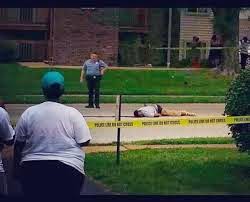
Sad to say that this propaganda. The events in Ferguson have brought to the fore the constant and uninterrupted brutalization of communities of color and the outright war of police against young men of color and, more generally, against all young men. An article in the Tampa Bay Times a few weeks ago asserted that "every 28 hours an unarmed black person is shot by a cop." A Los Angeles website, Laist reports the research done by the Los Angeles Youth Justice Coalition.”They found that police killed 589 people in the line of duty between January 1, 2000 and August 31, 2014. That's about 43 people each year or one person every eight days.” The majority of them were young black men.
One in three black men is imprisoned in the course of their life. According to some figures, about half of black men are under supervision of parole authorities. With a sharp increase of persons imprisoned, state governments have farmed out prisons to private companies. They manage to turn a profit by keeping prisoners under utterly inhumane conditions. Often lights, toilets,water do not function. Sick prisoners have no access to health care. Prison guards fail to protect prisoners against the assaults by others.
Once again men of color are the prime victims.
These are terrible facts. If we added up all the young black men brutalized by police and by the prison system we might well find that our government is as brutal as the dictators we have opposed in the last 10 or so years.
But the precise numbers are not important. What matters is that we are systematically being fed a view of the world designed to conceal the enormous failures of our so-called democratic system. According to the official story, the US is the country that is democratic at home, where all are equal, and we come to the aid of many abroad. A columnist for the Boston Globe, Stephen Kinzer, observed recently that American media are fascinated with World War II stories because our role in that war was decent. The many other wars in which we took the side of dictators for the sake of procuring raw materials for our corporations do not yield plots for movies, tv series or fodder for pundits. They have been forgotten.
Day in day out our attention is drawn to the brutalities of other dictators or other governments. It takes the month-long demonstrations not only in this country but all around the world in response to the killing of Michael Brown, to lift a corner of the shroud that covers the murderous activities of our own police forces, and of the federal government that supports those police forces with more lethal weapons and equipment.
The good news is that more and more Americans are waking up to this gross malfunction of our government spite of all the propaganda. This morning's paper reports an opinion poll in which almost 2/3 of persons asked allowed as how black people do not receive just treatment from our judicial system. The truth is slowly leaking out.
But before we, the citizens, and the government take actions, nothing will change.

Monday, May 26, 2014


Memorial Day 2014


 It's Memorial Day again and we are remembering men and women who died in American wars.
It is clearly fitting to remember them, but it is curious that there are many other heroic Americans who do not have their day of remembrance. Think of the many Americans – the majority African Americans – who died in the struggle for racial equality. Martin Luther King got his day but there are no days for Malcolm X. or Medgar Evers and the many less well known victims of racial violence.
While we are remembering heroic lives, why are we not talking about the parents who for many years worked two or even three jobs to provide a better life for their children, essentially giving up their own. Why do we not think of grandparents, barely finished raising their children, only to start all over raising their grandchildren because their children were unable or unwilling to do so.
When are we remembering the men and women who faithfully went off to work one day, as they had gotten so many days before, and died in a workplace accident?
Heroism takes many forms. Why only remember heroes killed in wars?
What makes Memorial Day different is the nationalist mythology that is regularly rehearsed on that day. Inevitably speakers will say that the soldiers who died were all heroes. They died, the speakers will add, to preserve American freedoms.
Let's look at the reality of that.
The period between World War I and World War II, approximately 25 years, was the longest period the United States was at peace. The average time between wars in our history was more like 10 years. The war that claimed most casualties by far was the Civil War in which, according to different estimates, between 600,000 and 750,000 soldiers died. That war clearly contributed to the agonizingly slow liberation of slaves. It is not clear that it preserved anything for whites, or Hispanics, or Native Americans, or various other groups.
The largest number of our wars were fought against Native Americans. The free institutions we boast of owed a great deal to the political practices of some of the Native American tribes. Yet, ironically, these wars clearly did not contribute to their freedom. It cleared space for the rest of us to live however we chose to live.
The soldiers who died in World War II may have protected us against authoritarian regimes. But that is by no means self-evident. It would be difficult to argue that. It is definitely not true of any of the wars we fought since then. The Asian wars were clearly defeats but our institutions remain the same. It is not obvious how the invasions of Iraq and Afghanistan preserved American institutions.
The attacks of 9/11 have clearly resulted in restrictions of American freedoms but those were not imposed by Osama bin Laden or by Al Qaeda, but were made in Washington with the approval of the majority of American citizens. To the extent that our institutions are less free than they once were – and that is a plausible claim – we deprived ourselves of those freedoms.
The transition from a popular democracy to an oligarchy of the very rich was not imposed on us by any foreign nation. The very rich and those they bought managed to do that all by themselves.
All wars, whether domestic or foreign, where only peripherally related to the maintenance of American freedoms. The foreign wars were all efforts to maintain our imperial power, to become, to be and to remain the most powerful nation on earth. We are still involved in that project. Congress just appropriated more than $600 billion for the military.
Memorial Day is part of the propaganda that is used to justify this brute striving for power. It tells us that we are not trying to dominate the globe. We are just trying to preserve our freedom.
But that is a blatant lie. It dishonors the men and women who died in all of foreign wars. The least we can do is not to turn they are deaths into a another propaganda tool.